Product Builder vs. Product Manager: The Role AI Is Rewriting
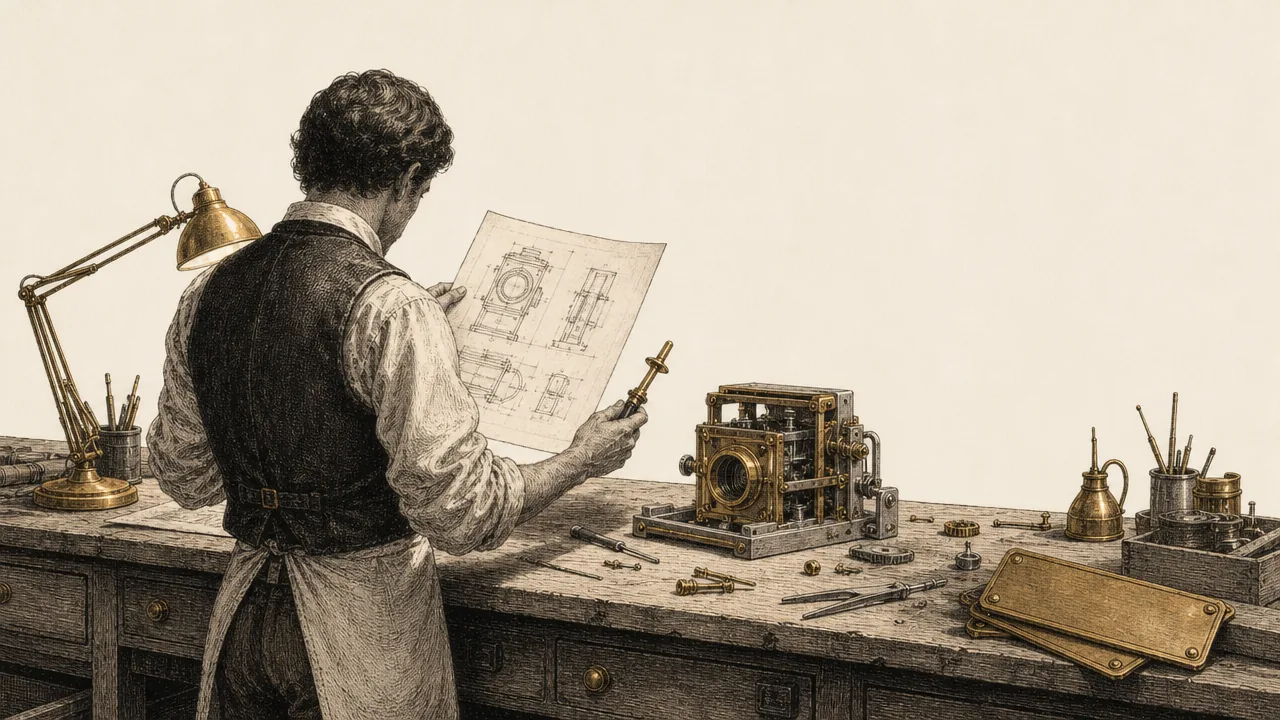
A product builder is one person who decides what to build and then builds it, using AI coding agents to cover the engineering work. The role merges product management and software engineering, and AI-native companies are hiring for it now.
The 2026 CPO Insights Report puts hard numbers on the shift: traditional product manager roles fell 30% across industries and up to 70% in SaaS, while product builders grew tenfold in a year. Product thinking still matters a lot. What changes is that the spec, the written decision about what to build and why, becomes a builder's most valuable artifact.
What is a product builder?
A product builder is a hybrid product and engineering role in which one person defines the problem, writes the spec, directs AI coding agents to build the solution, and owns the outcome in production.
Indy Leonard of Viberr describes it as "a major shift to combine product management and software engineering into a single role." The builder still does discovery, prioritization, and customer work. The difference is that the handoff to engineering mostly disappears.
Writing in Forbes, Larry English describes builders as people who combine strategy, technical skill, design sense, and business judgment. Specialists still matter. What changes is how often one person can carry an idea from insight to shipped product alone.
Why the product builder role is growing now
Three forces are pushing product and engineering together. Each one is backed by recent data, not just hype.
- Building got cheap. Agents can draft requirements, write code, and ship prototypes, so the cost of trying an idea dropped sharply.
- Handoffs got expensive. At Zencoder, a PM built, tested, and deployed a feature in one day with no ticket, as CEO Andrew Filev wrote in VentureBeat.
- Leaders moved to strategy. CPOs now spend 74% of their time on strategy, up from 69%, per the 2026 CPO Insights Report.
Time spent on stakeholder management fell from 28% to 10%, and roadmap work fell from 18% to 10%. That is the coordination layer a product builder absorbs. Note that the report comes from a product community and a venture firm, so treat it as a strong signal rather than a census.
Product builder vs. product manager vs. product engineer
The three titles overlap, and companies use them loosely. This table shows the practical differences most teams mean.
| Product manager | Product engineer | Product builder | |
|---|---|---|---|
| Core question | What should we build and why? | How do we build it well? | What should we build, and can I ship it this week? |
| Main output | PRDs, roadmaps, and priorities | Code, systems, and reviews | A governed spec plus working software |
| Writes production code? | Rarely | Yes, by hand or with AI | Yes, mostly through AI agents |
| Handoffs | Many, to design and engineering | Some, from product | Few; one owner from idea to release |
| Biggest risk | Slow translation of intent | Building the wrong thing well | Building the wrong thing fast |
What a product builder does all day
The job is less about typing code and more about directing it. Anthropic's study of its own teams shows how fast the work mix changes once agents are in the loop.
Anthropic also found engineers working in areas they used to avoid, such as front end and databases. Non-technical staff used Claude Code mostly for debugging. That is the product builder pattern in miniature: one person, wider range, fewer handoffs.
- Morning: Review customer signals and decide the next most valuable change.
- Midday: Write or update the spec, including the audience, the reason, and the acceptance criteria.
- Afternoon: Direct agents, review their output against the spec, and ship behind a flag.
- Always: Record what changed and why, so the next person or agent has context.
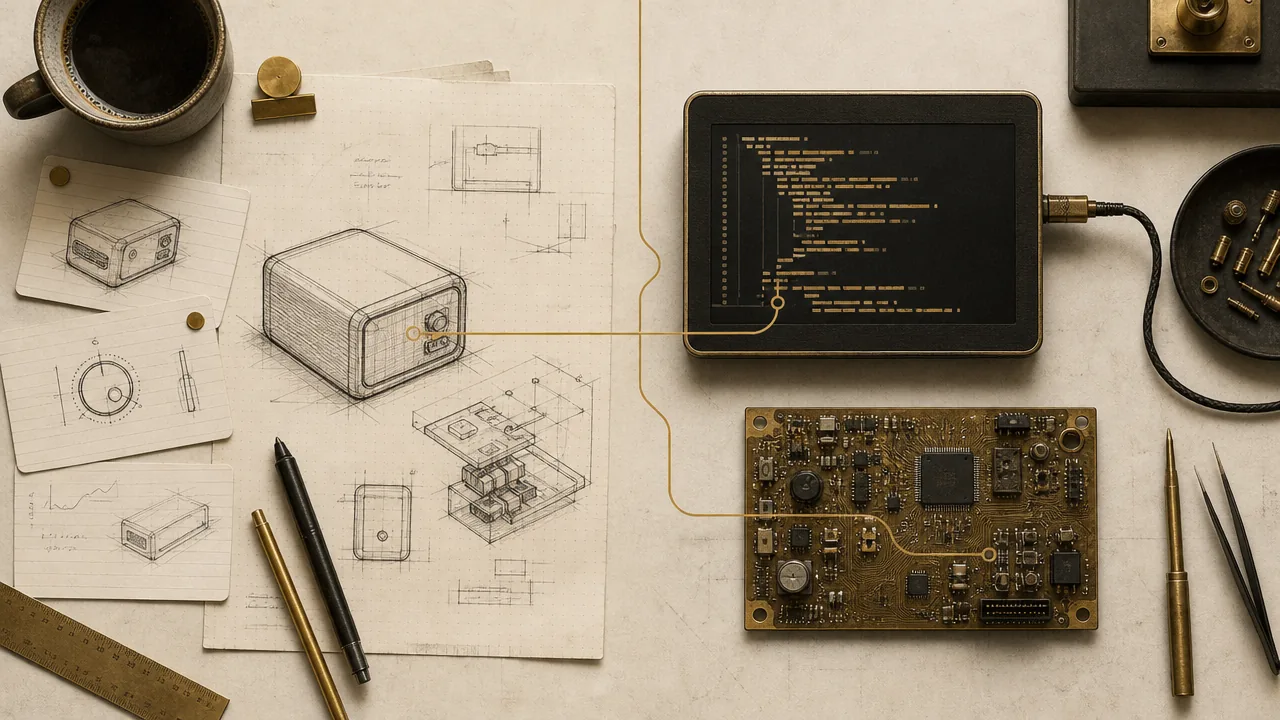
Should product managers know how to code in 2026?
Product managers do not need to hand-write production code, but they do need to direct AI coding agents, read what those agents produce, and write specs precise enough for an agent to build from.
The skill that transfers best is not syntax. It is clear, testable intent. Zencoder's CEO noticed that PMs who built their own ideas wrote sharper specs, which produced better agent output and fewer cycles.
The new risk: building the wrong thing faster
Larry English makes the key point in Forbes: AI amplifies existing weaknesses, so unclear strategy just builds the wrong thing faster. Google's DORA 2025 research describes AI the same way, as an amplifier of what a team already does well or poorly.
For a product builder, that risk lives in the spec. Specs written alone, at speed, and partly by agents tend to get long, drift across copies, and skip review. Research cited on Crema's research page shows language models pad text when uncertain, and that humans read long documents less carefully over time.
The product builder's real job description is the spec
If one person both decides and builds, the spec is the only place anyone else can check the decision. It becomes the contract between the builder, the agents, and the team. That contract needs governance, not just a doc link.
- Keep it in Git, so it has history, review, and blame like code.
- Review it in small steps, sized for real human attention.
- Record the reason for every change, so the next builder understands the call.
- Gate agent proposals by length, audience, and stated purpose.
Crema gives product builders that structure. It turns spec writing and review into decision cards of about 25 minutes, each with a recorded reason, stored in one GitHub repository. It works with Claude Code, Cursor, Kiro, and Spec Kit.
How to become a product builder
- Ship one small feature end to end with an AI coding agent, from spec to production.
- Learn to read diffs, even if you never write them by hand.
- Write specs an agent can test against, with clear acceptance criteria.
- Own the result in production, including metrics and rollback.
- Keep a decision log, so your speed does not erase your reasoning.
What Is a Software Factory? Why AI Coding Pipelines Run on Specs
When 100% of the Company Codes: How AI-Native Companies Stay in Control
Frequently asked questions
What is a product builder?
A product builder is one person who decides what to build and then builds it, using AI coding agents for most of the engineering. The role combines product management and software engineering.
Is the product builder replacing the product manager?
The 2026 CPO Insights Report predicts traditional PM roles will fade by 2030 as builders grow. Product thinking stays essential; the handoff to engineering is what shrinks.
What is the difference between a product builder and a product engineer?
A product engineer is an engineer with strong product sense. A product builder starts from the product side and owns the decision, the spec, and the shipped result.
What skills does a product builder need?
Customer insight, clear written specs, the ability to direct and review AI coding agents, basic code literacy, and ownership of outcomes in production.
What tools do product builders use?
Common choices include Claude Code, Cursor, and Kiro for building, GitHub for version control, and a spec control plane such as Crema for governing what agents build.
Sources and further reading
- Products That Count and Mighty Capital (2026). 2026 CPO Insights Report (press release)
- Forbes, Larry English (2026). AI Is Rewriting the Rules of Product Development
- VentureBeat, Andrew Filev (2026). When product managers ship code: AI just broke the software org chart
- Anthropic (2025). How AI Is Transforming Work at Anthropic
- Google Cloud (2025). How are developers using AI? Inside our 2025 DORA report
- The Pragmatic Engineer (2026). The state of the tech industry in 2026
- Crema (2026). Research and bibliography